
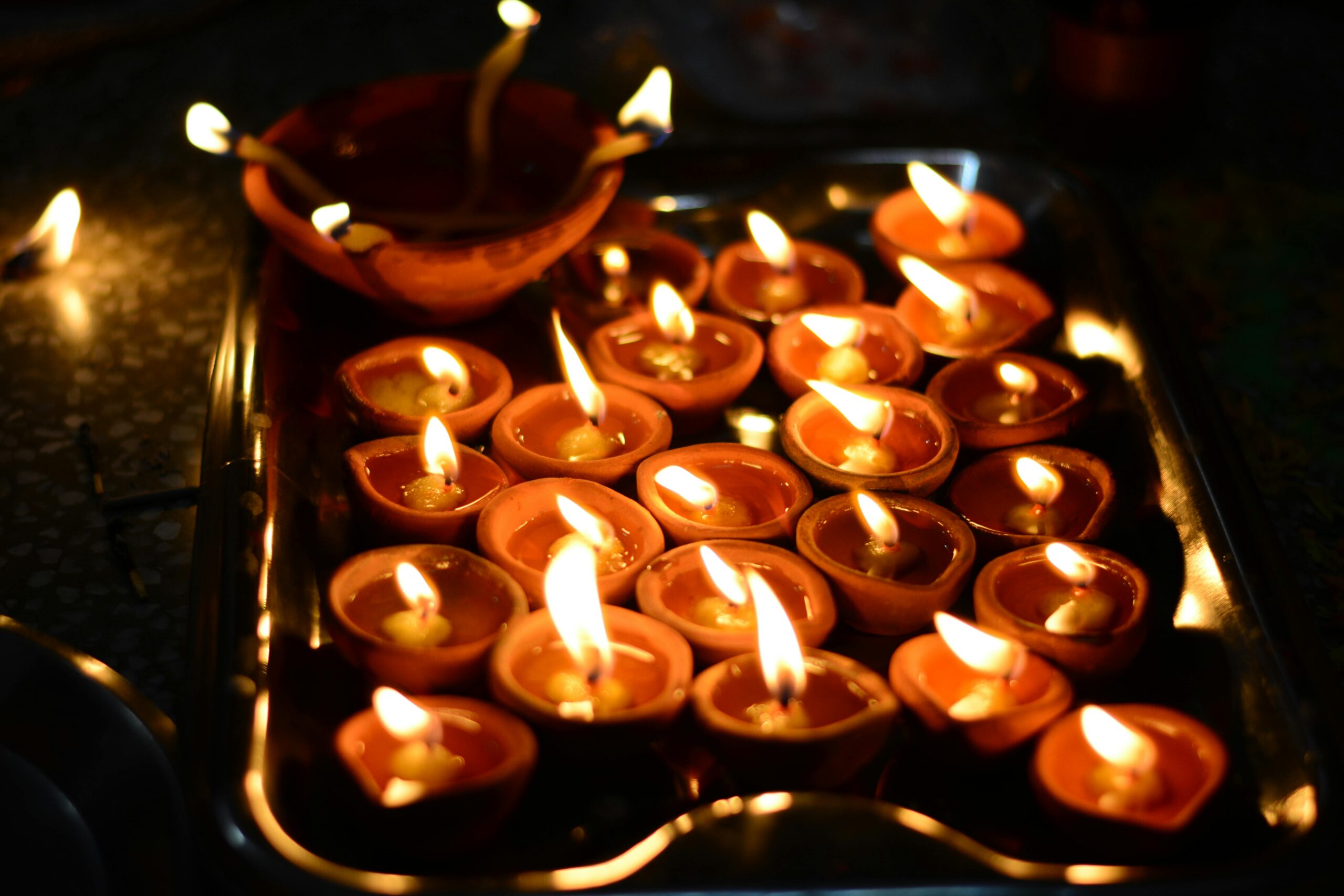
The Lamp of Truth
Long ago, in a small village surrounded by hills and rivers, there lived a kind boy named Arun. He was about twelve years old, full of questions about the world. His father was a farmer, and his mother made sweets during festivals. They were poor but honest people.
The people of Arun’s village were preparing for Diwali. Everyone decorated their houses with lamps, flowers, and colorful rangoli. The whole village smelled of sweets and incense. But there was also a shadow that hung over them.
For many years, a cruel moneylender named Raghavan had controlled the village. He cheated people with false accounts, took away their land, and frightened them with his guards. Everyone knew he was dishonest, but no one had the courage to speak against him. “What can we do? He has power and wealth,” the villagers would whisper.
Arun’s father had also borrowed some money from Raghavan when his crops failed. Even though he had repaid the debt, Raghavan claimed that they still owed him. One morning, Raghavan’s men came and said, “Your field belongs to Raghavan now. You did not clear your debt.” Arun’s father argued, “I gave back every coin. I owe nothing!” But the guards laughed. “Who will prove it? No one dares stand against Raghavan.”
That night, as Arun helped his mother light small clay lamps, his heart was heavy. He asked her, “Mother, why do we celebrate Diwali if darkness in people’s hearts still wins?” His mother placed a hand on his head and said gently, “Because, my child, the light teaches us never to give up. Even a small lamp can break the biggest darkness.”
Those words stayed in Arun’s mind.
On the day of Diwali, the whole village gathered in the temple courtyard for prayers. Raghavan also came, dressed in silk, wearing gold rings. He smiled proudly as if he owned everything.
After the prayers, the village headman said, “As is our custom, a young boy will carry the Lamp of Truth around the village tonight. This lamp is kept in the temple all year and lit only on Diwali. It reminds us that truth must guide us.”
This year, the priest announced, “Arun has been chosen to carry the Lamp of Truth.” Everyone clapped. Arun felt proud but also a little afraid.
That evening, as Arun held the lamp, its flame flickered warmly. The villagers followed him, singing and lighting their own diyas from it. But suddenly, Raghavan stepped forward. “Stop!” he shouted. “What truth do you all celebrate when lies rule this place? Do you not know that this boy’s family are liars? They still owe me money!”
The crowd fell silent. Arun’s father lowered his head in shame. His mother’s eyes filled with tears. Raghavan smirked. “See, no one can challenge me.”
Arun looked at the glowing lamp in his hands. His mother’s words came back: Even a small lamp can break the biggest darkness. He felt courage rising in his heart. He stepped forward and said, “Raghavan, you are lying. My father has paid you back. You are cheating all the villagers. You are afraid of this lamp because it shines with truth!”
The crowd gasped. No child had ever spoken to Raghavan like that. Raghavan grew red with anger. “How dare you! You are only a boy. Do you have proof?”
Arun held the lamp high. “This lamp is proof. Every year we promise to live with honesty. Tonight, I ask the villagers: Who among you has been cheated by Raghavan?”
For a moment there was silence. But then, an old farmer raised his hand. “He took my land even after I cleared my debt.” Another woman cried, “He kept my gold bangle, saying the weight was less.” Slowly, one by one, the villagers found their voices. Their courage grew from Arun’s words.
Raghavan shouted, “These are all lies!” He tried to snatch the lamp from Arun’s hands. But Arun stepped back. The flame did not flicker. Instead, the wind blew hard, and yet the lamp stayed steady, as if protecting the truth itself.
The priest’s voice rang out: “Raghavan, the Lamp of Truth has spoken. Lies cannot win tonight.” The headman added, “From today, we will not be silent. We will take back what you have stolen.”
The villagers, holding their lamps, formed a circle around Raghavan. For the first time, the moneylender looked afraid. He ran away into the darkness. His guards, seeing the courage of the people, also fled.
The village cheered. They lifted Arun on their shoulders. “You gave us courage!” they said. Arun’s father hugged him tightly, tears in his eyes. “My son, you have shown us what true light is.”
That night, the village shone brighter than ever. Lamps burned in every corner, not just of homes but in people’s hearts. The villagers returned the stolen land and goods to their rightful owners. For the first time in many years, laughter filled the air without fear.
Arun placed the Lamp of Truth back in the temple. He whispered, “Thank you for giving me courage.” And in the gentle glow of Diwali night, he realized something: Diwali is not only about lighting lamps outside, but also about keeping a lamp of truth and courage alive inside us.
From that day, Arun became a symbol of bravery in the village. People remembered the boy who dared to speak against injustice. And every Diwali after that, they told the story of how the smallest lamp lit the way for the whole village.
Diwali teaches us that light wins over darkness, truth wins over lies, and courage wins over fear. Even if you are small, like Arun, your courage can inspire many. One small flame can brighten the world.